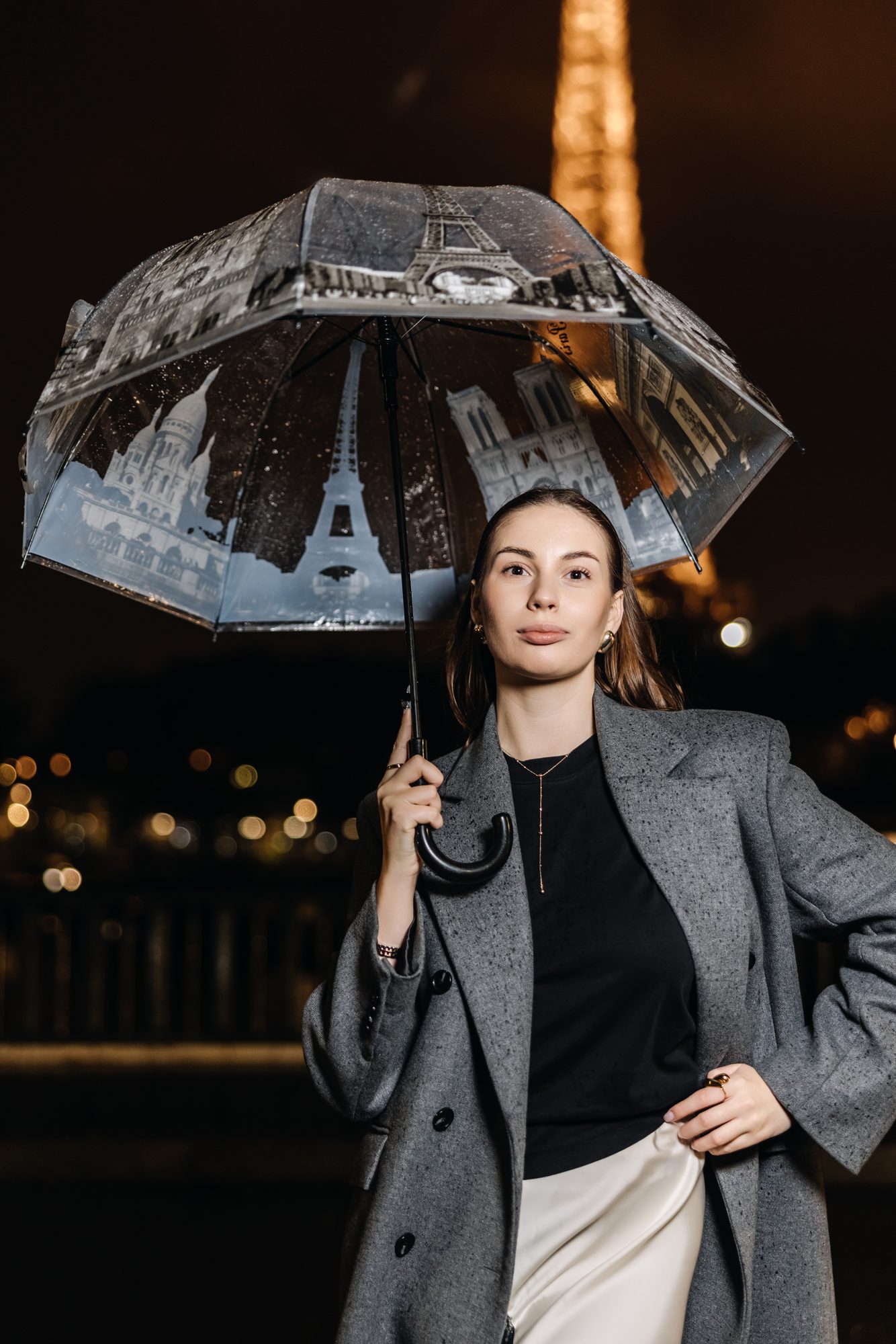
Winter in Paris is damp and grey more than it is freezing. That decides the outfit: you dress for five degrees, wet ground and a white sky, and you pick a coat you want in every frame.
The numbers, November to February
These are the Météo-France 1991 to 2020 averages for Paris-Montsouris. In November the average afternoon high is 11.1°C and the average low 6.2°C. In December it is 8.0°C and 3.8°C, in January 7.6°C and 3.2°C, in February 8.8°C and 3.3°C. Light frost at night is common, and temperatures rarely go below minus 5°C.
It rains on about 10 days in November, 11 in December, 10 in January and 9 in February. Snow is recorded on two to four days a month from December to February and rarely stays on the ground. Average humidity is above 80 percent from November to January, which is why eight degrees in Paris feels colder than the number.
Daylight is short. On 15 November 2026 the sun rises at 8:00 am and sets at 5:09 pm. On 21 December it is 8:41 am and 4:55 pm, a day of 8 hours 13 minutes. On 15 January 2027 it is 8:39 am and 5:20 pm, and on 15 February 8:00 am and 6:10 pm. December has 57 hours of sunshine in the whole month, so expect cloud. Cloud is kind to faces: the light is soft all day and you are not tied to golden hour.
Warm without bulk
Bulk comes from thick layers. Three thin ones are warmer than one thick one and keep your outline.
Start with a thermal top and leggings or tights worn against the skin. Thin merino or a synthetic heat layer disappears under a dress or shirt. Choose a low or wide neckline for the base layer so it does not show at the collar, and a skin tone or black so it does not show at the cuffs.
The middle layer is what the camera sees when the coat is open: a fine knit, a turtleneck, a shirt and a thin sweater. A chunky sweater under a fitted coat makes the arms look stuffed, so wear one or the other.
Under a dress or skirt, fleece-lined tights look like ordinary opaque ones in a photo. Under trousers, a thermal legging is invisible. A thin down vest under a roomy coat adds a lot of warmth and can come off for a few frames.
The coat is the outfit
In most winter photos the coat is most of what you see, so choose it first and build around it.
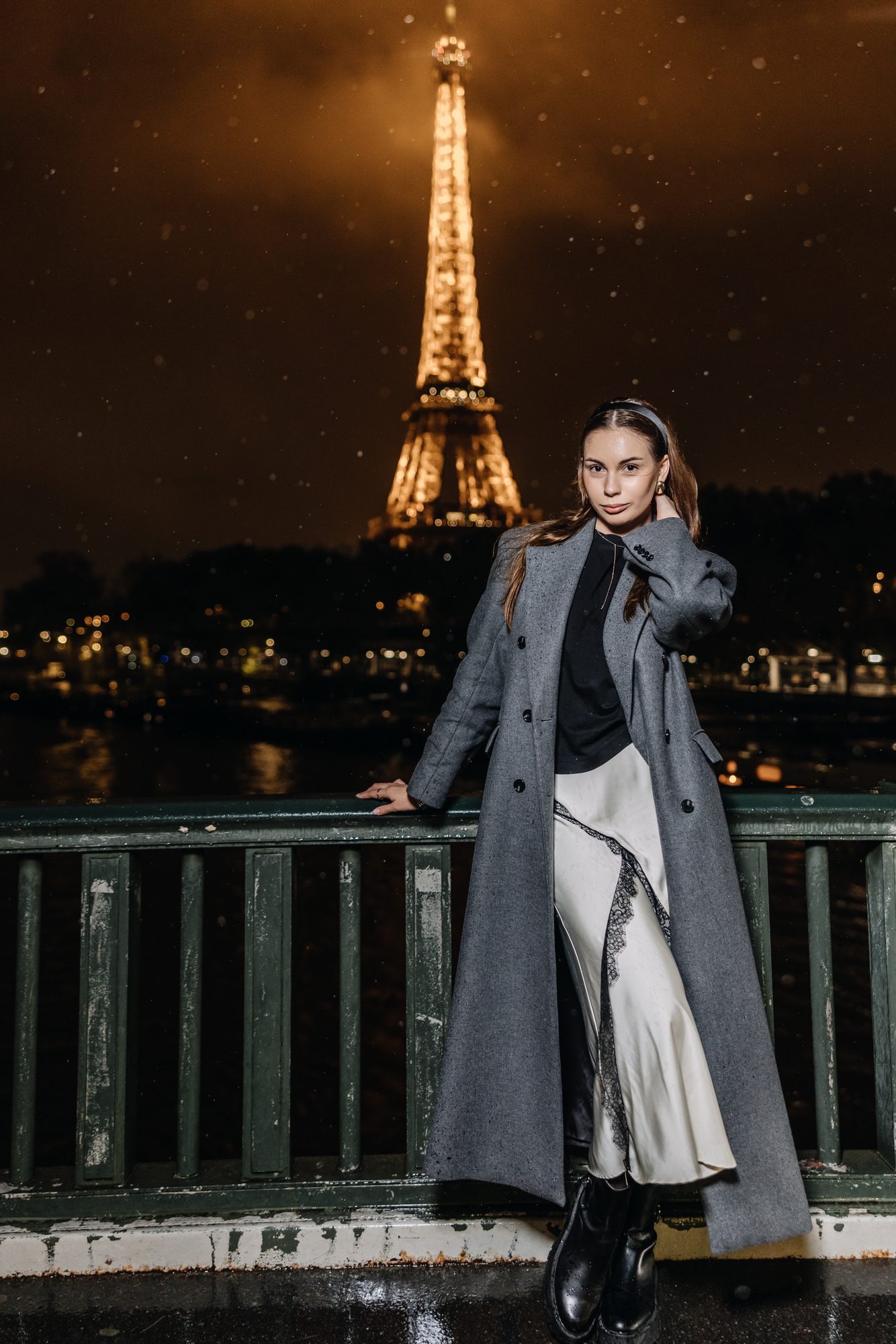
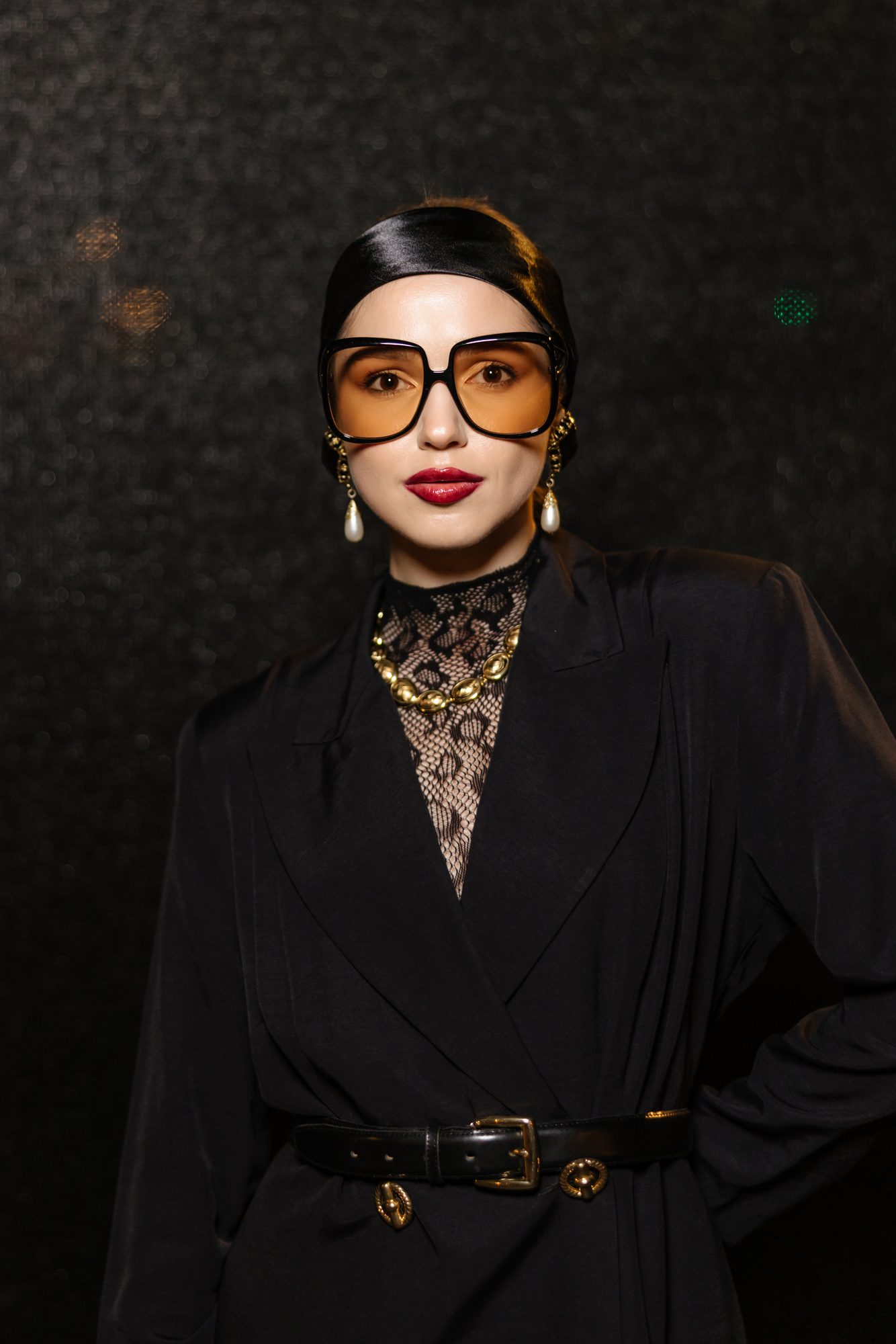
A long coat, to the calf or the ankle, gives one clean line and moves when you walk. A belt or a defined shoulder gives you a shape that a straight puffer does not. If your warmest coat is a puffer, wear it between locations and carry the one for the photos, or wear the photo coat with better layers underneath.
Wear it open for some frames, closed for others, and over the shoulders for a few. That gives you three looks from one coat. Check the lining and the inside of the collar, because an open coat shows them.
Colours against grey stone and bare trees
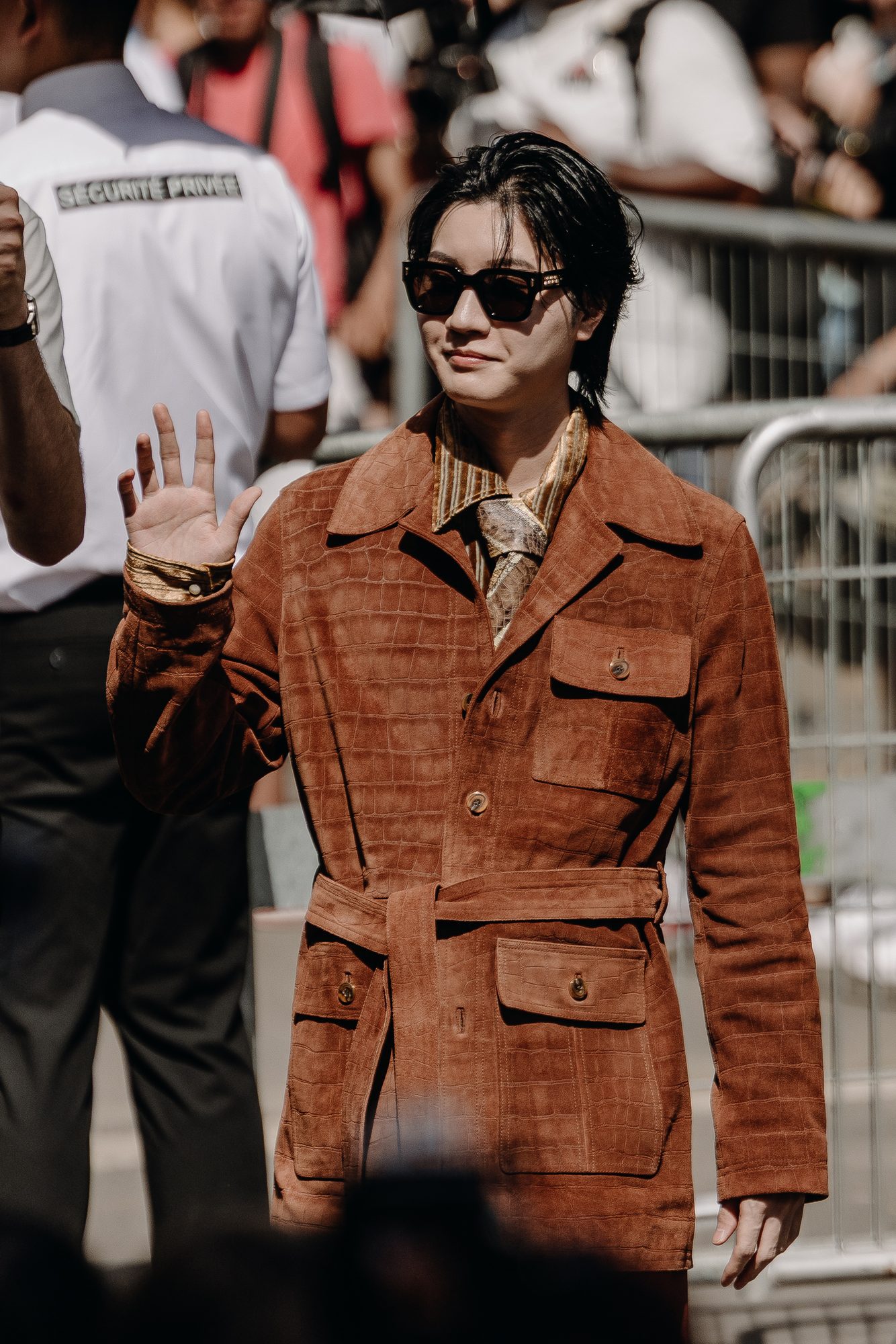
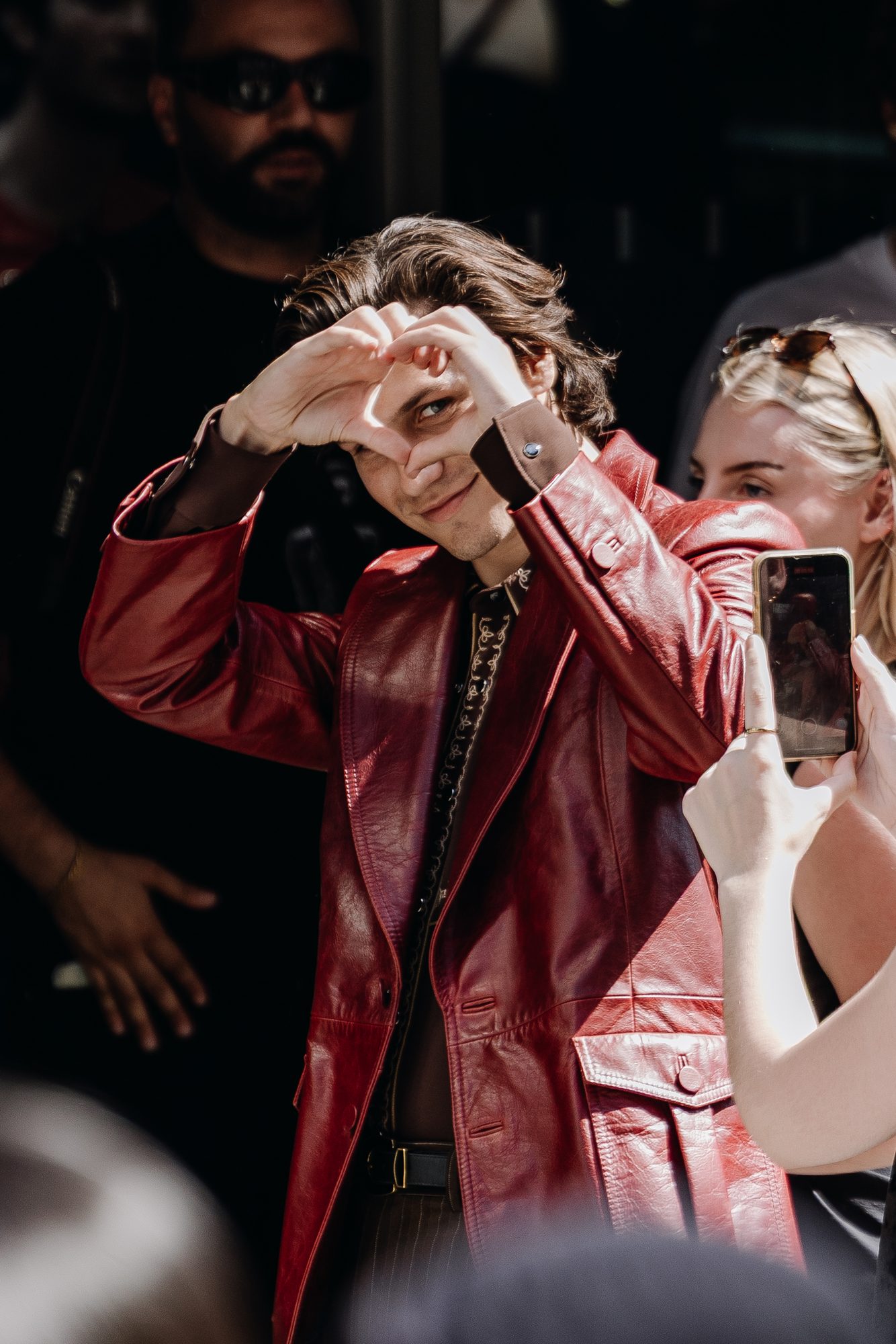
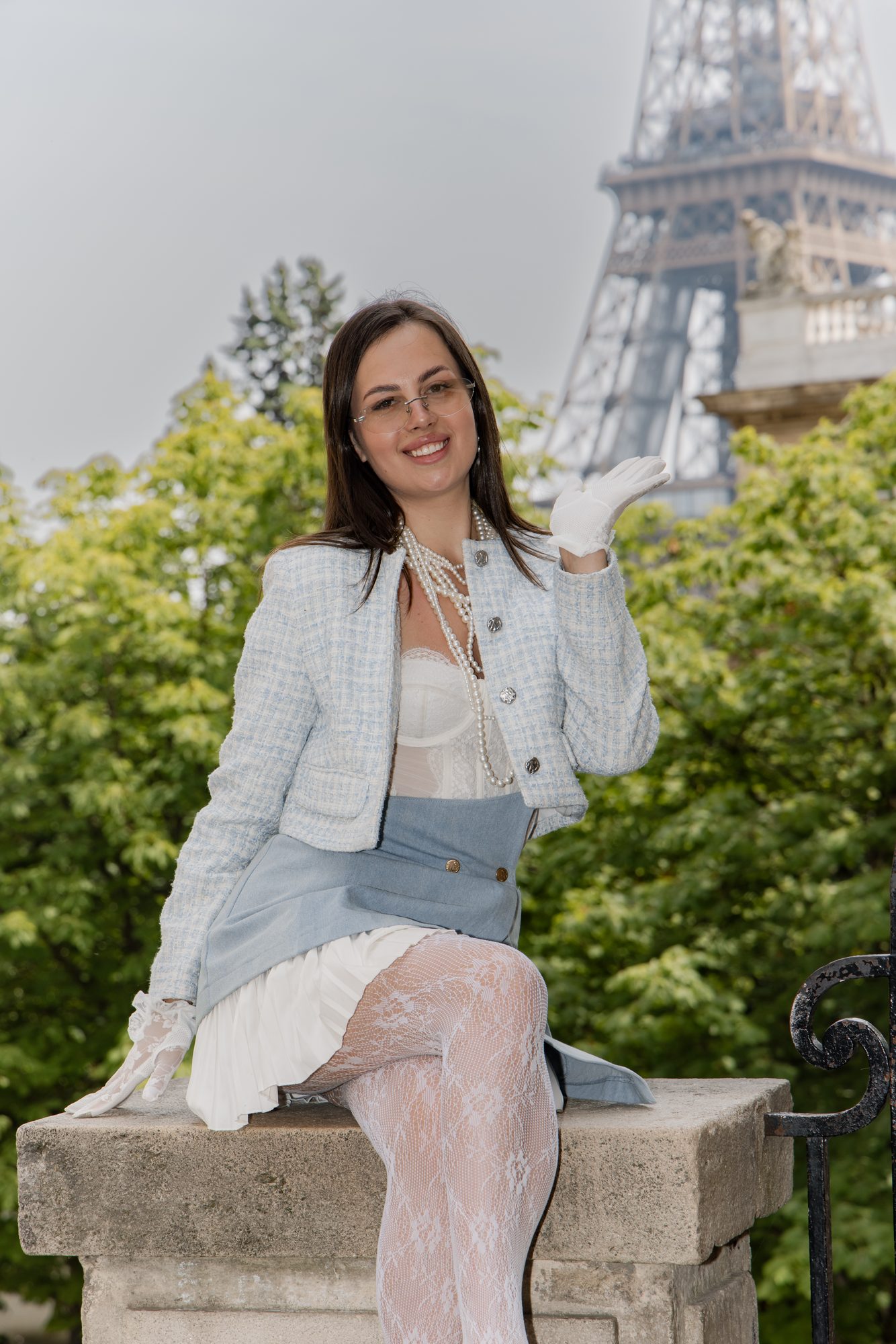
The winter background is limestone, zinc roofs, dark branches and a pale sky. Everything in it is grey, beige or brown. A coat in camel, cream, red, deep green, cobalt or burgundy separates you from it at once. Black works in the daytime, when there is pale stone or sky behind you.
Grey on grey stone and beige on beige stone are the two combinations to avoid. If your coat is neutral, put the colour somewhere else: a red scarf, a green bag, a bright knit at the collar.
For two people, do not match. Pick one coat with colour and one neutral, or two tones from the same family.
Gloves, scarf and hat
Cold hands show in photos as red knuckles and stiff fingers. Leather gloves solve that and give your hands something to do: pulling one off, holding the pair, adjusting a collar. Thick ski gloves look out of place with a coat, so bring a thin pair for the frames and a warm pair for the breaks.
A large scarf is the most useful prop of the season. It adds colour near the face, it can be wrapped, draped or held, and it moves in the wind. A beret or a wool hat keeps you warm and frames the face. Bring a small brush or comb, because a hat flattens hair.
Shoes on wet stone
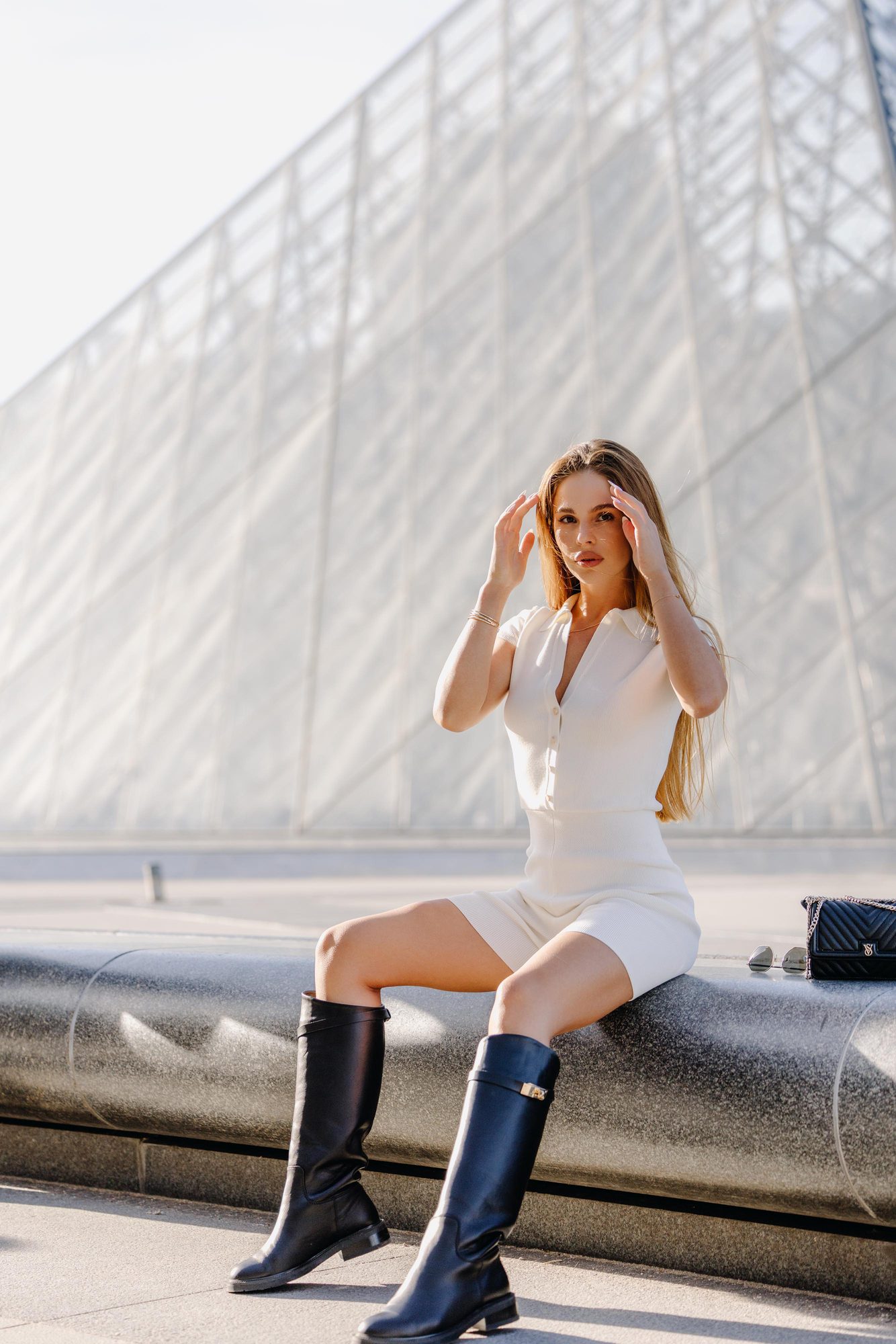
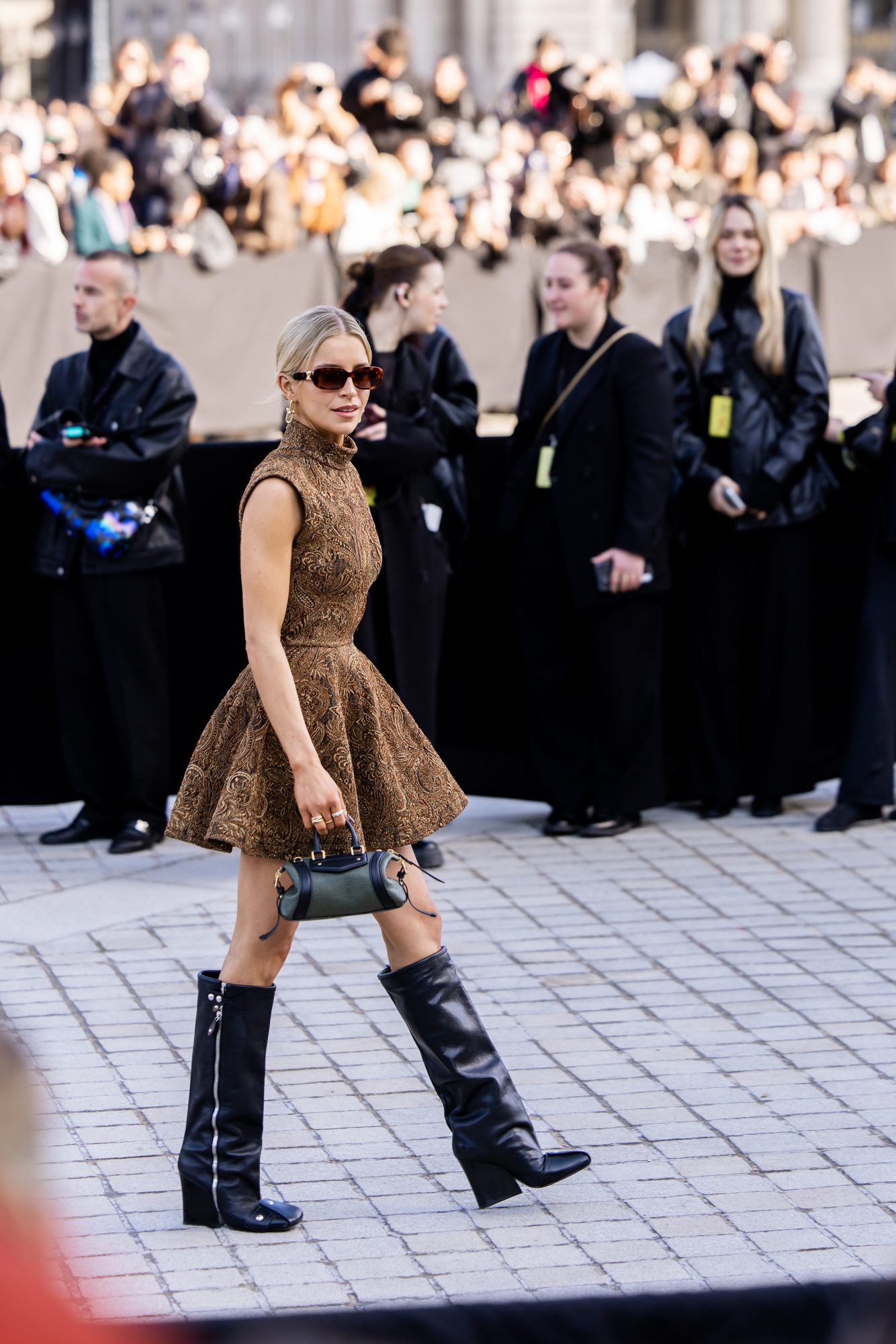
The Louvre courtyard, the quays and many old streets are cobbled, and from November to February they are wet on about one day in three. Smooth leather soles slide on wet stone, and thin heels catch in the gaps between cobbles.
Ankle boots or knee boots with a rubber sole and a block heel are the safe choice, and they cover the gap where cold gets in. If you want heels in the frame, walk in flat boots and change on the spot. Suede marks in the rain, so treat it with a protective spray before the trip or leave it at home on a wet day. Wear wool socks inside the boots: cold feet end a session faster than anything else.
Night sessions in winter
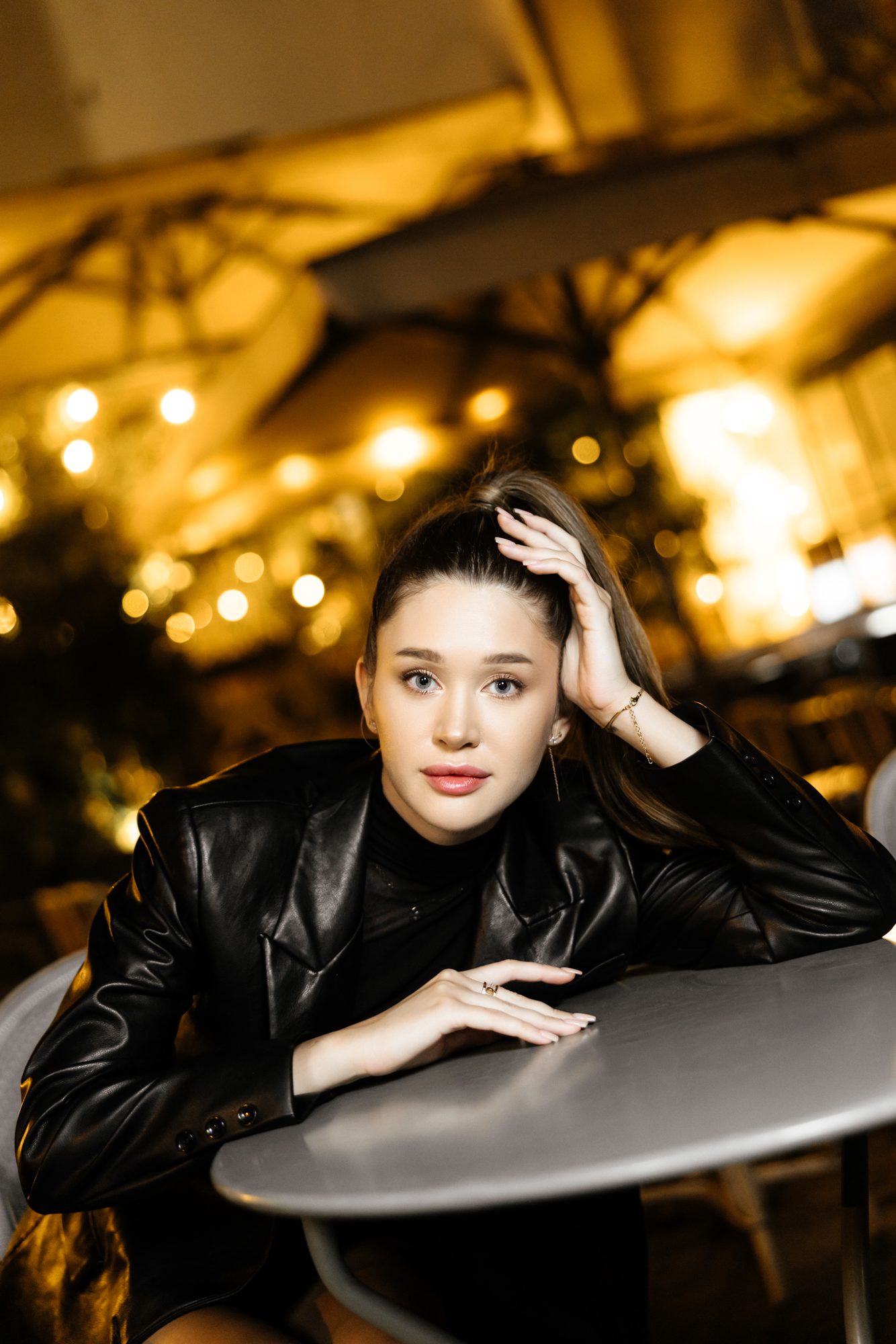
In December it is dark soon after 5 pm, so a night session can start at 5:30 pm and be finished before dinner. That is the practical advantage of winter: in June the same photos mean being out at 11 pm.
From late November the city adds its own light. On the Champs-Élysées the 2026 illuminations are planned from 22 November to 3 January 2027, with 400 lit trees until midnight. The Christmas windows at Galeries Lafayette Haussmann open on 12 November 2026.
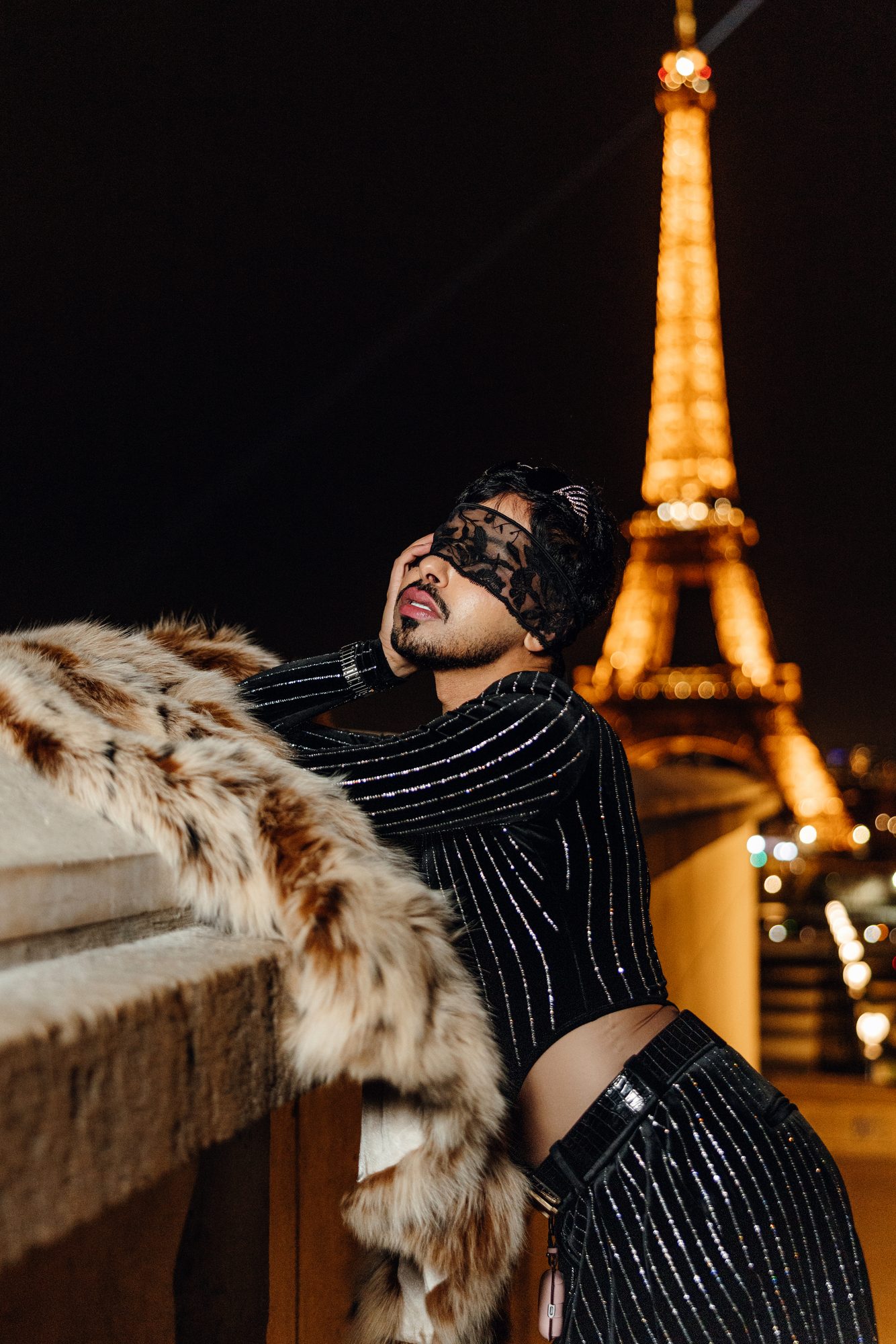
Against a dark sky, light colours read best. A cream, camel or light grey coat stands out from the night, and a black one needs a lit wall or window behind it. Wet pavement helps at night, because it doubles every lamp.
Staying warm between frames
Plan the route around warm stops. Covered passages are indoors and free to walk through. Passage des Panoramas, at 11 boulevard Montmartre, is open every day from 6 am to midnight, and Passage Jouffroy across the boulevard from 7 am to 9:30 pm. A café table for ten minutes resets cold hands.
Keep moving between locations and stand still only for the frames. Take the warm coat off last and put it back on first. Disposable hand warmers in the coat pockets keep your fingers working, and one in each boot does the same for toes.
Cold drains a phone. Apple gives 0 to 35°C as the working range for an iPhone and says that below it the battery can run down faster or the phone can switch off until it warms up. Keep it in an inside pocket, close to your body.
What to bring
Bring one bag that zips. In it: the thin gloves and the warm ones, hand warmers, tissues, lip balm, a compact umbrella in black or a transparent one, a comb, a spare pair of tights, flat boots if you are shooting in heels, and a power bank for the phone. Wear the thermal layer from the hotel, because there is nowhere convenient to change on a quay in January.
Ilia Pisarenko photographs portraits, couples and proposals in Paris.