Light and time by season
In mid-January the sun rises around 8:30 am and sets around 5:30 pm. In mid-April it is about 7:00 am and 8:45 pm. In mid-July, about 6:00 am and 9:45 pm. In mid-October, about 8:15 am and 7:00 pm. Clocks go back on the last Sunday of October, and sunset jumps from roughly 6:45 pm to 5:45 pm overnight.
Golden hour is the hour after sunrise and the hour before sunset, when the sun is low and the light is soft.
Sunrise and sunset give similar light and very different surroundings. A July sunrise session starts at 6:00 am, three hours before the Louvre opens, when few visitors are out. At sunset everyone is awake and outside. Winter flips part of this: a January sunrise at 8:30 am is half an hour before the museum opens, so the early start buys you less.
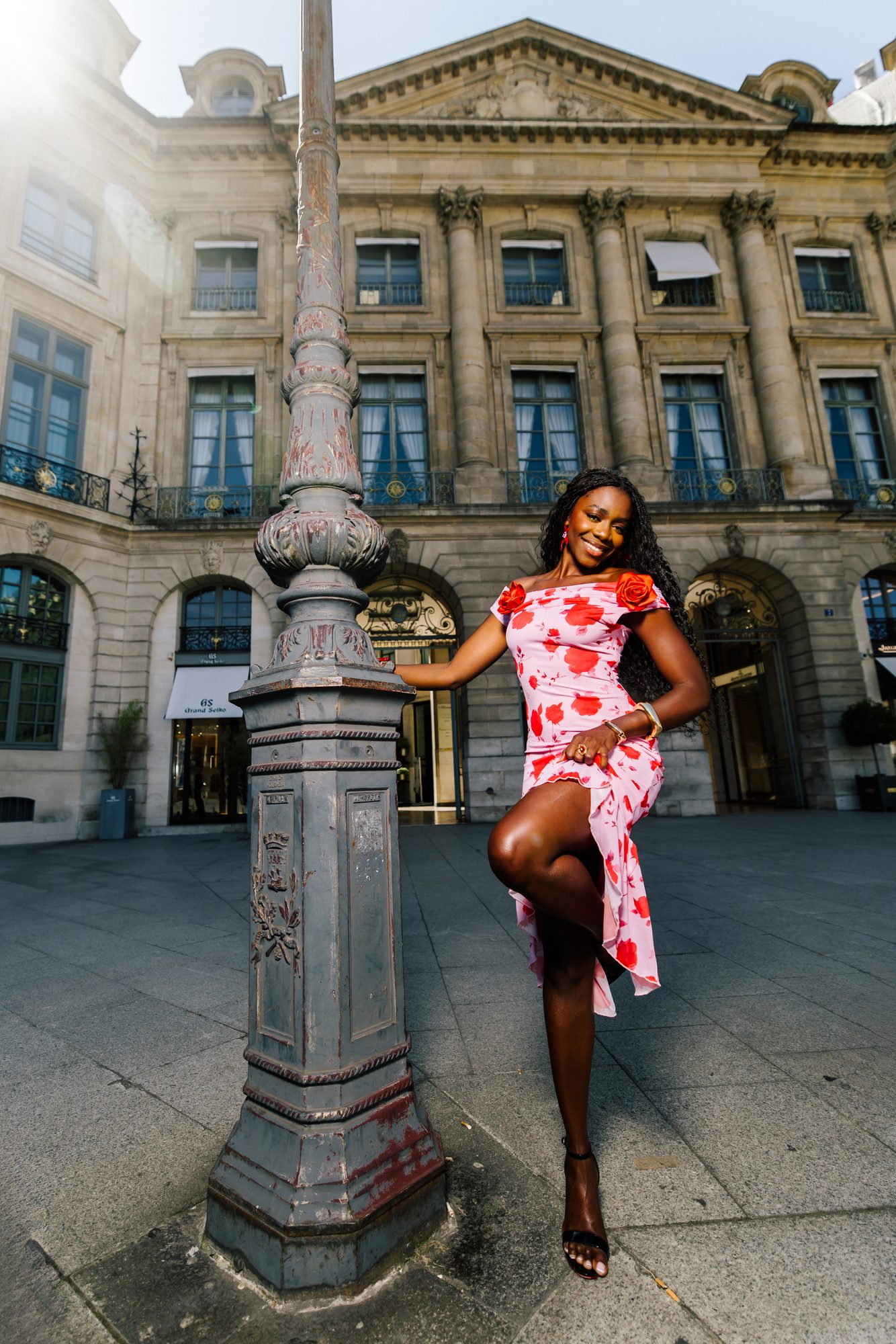
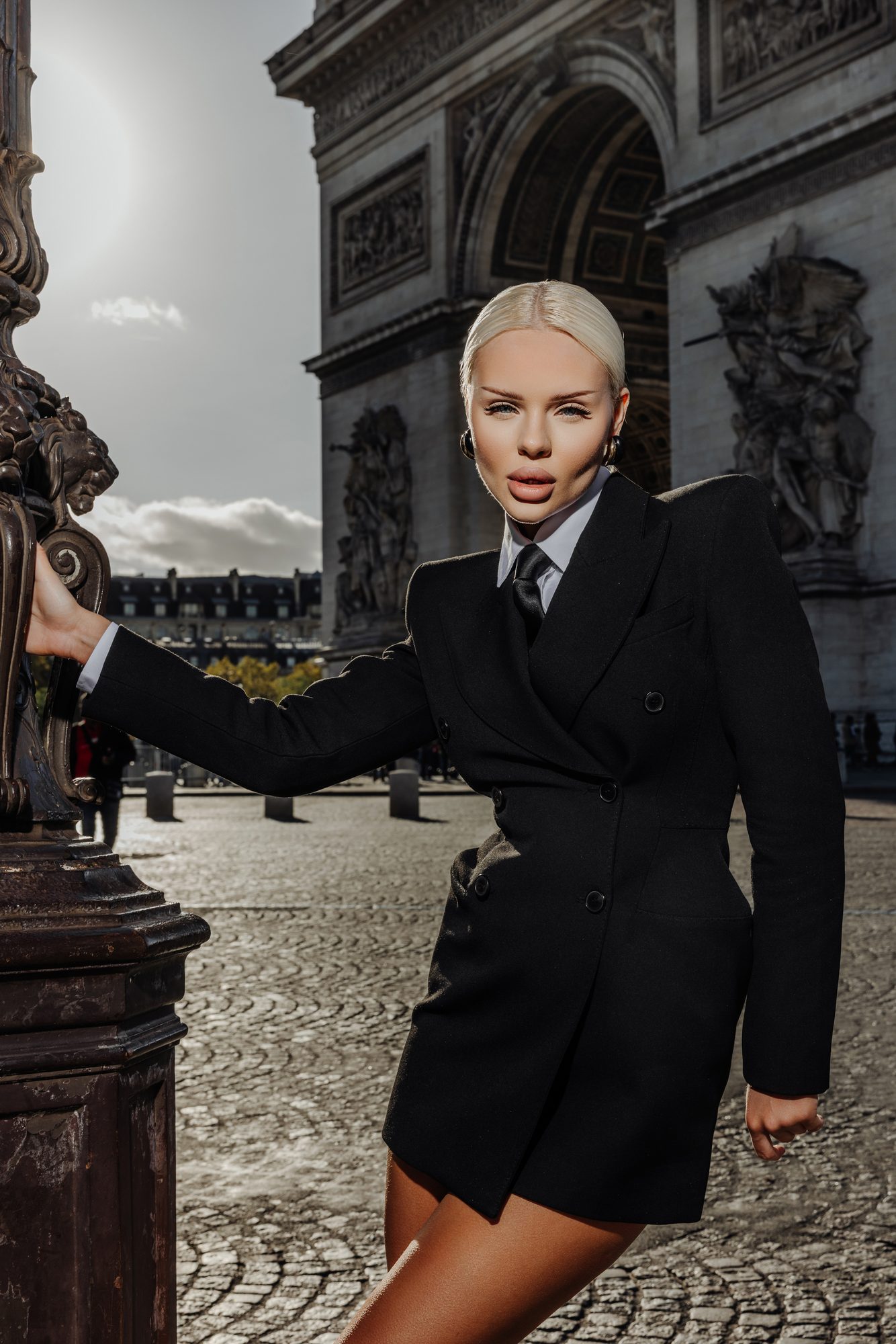
When places are empty and when they are packed
The Louvre courtyard with the pyramid opens to the public at 7:30 am and closes at 9:00 pm. The museum opens at 9:00 am, stays open until 9:00 pm on Wednesdays and Fridays, and is closed on Tuesdays. The museum queue fills the courtyard, so be there well before 9:00. The Tuileries garden next door opens at 7:00 am from late March to late September and at 7:30 am the rest of the year.
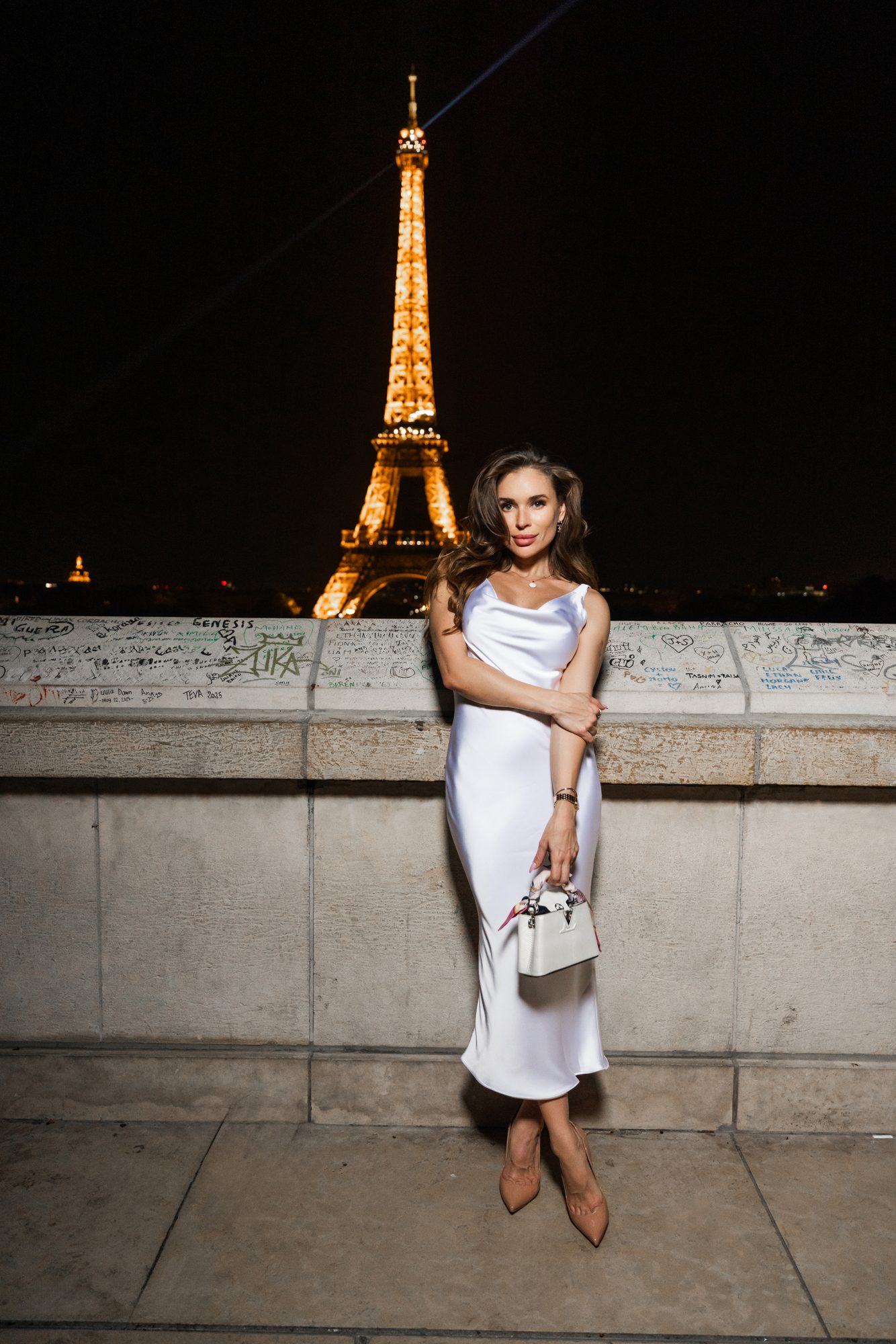
Seen from Trocadéro, the Eiffel Tower lights come on at nightfall and sparkle for five minutes at the start of every hour, which is when people gather on the terrace. Bridges are ordinary streets with traffic and pavements, so they follow the city's rhythm: quiet early in the morning, busier on weekends and warm evenings.
What to wear
Paris backgrounds are pale: limestone, grey zinc roofs, a sky that is often white. Solid, saturated colours stand out against them. Red, deep green, navy and black all work. Beige on beige stone disappears.
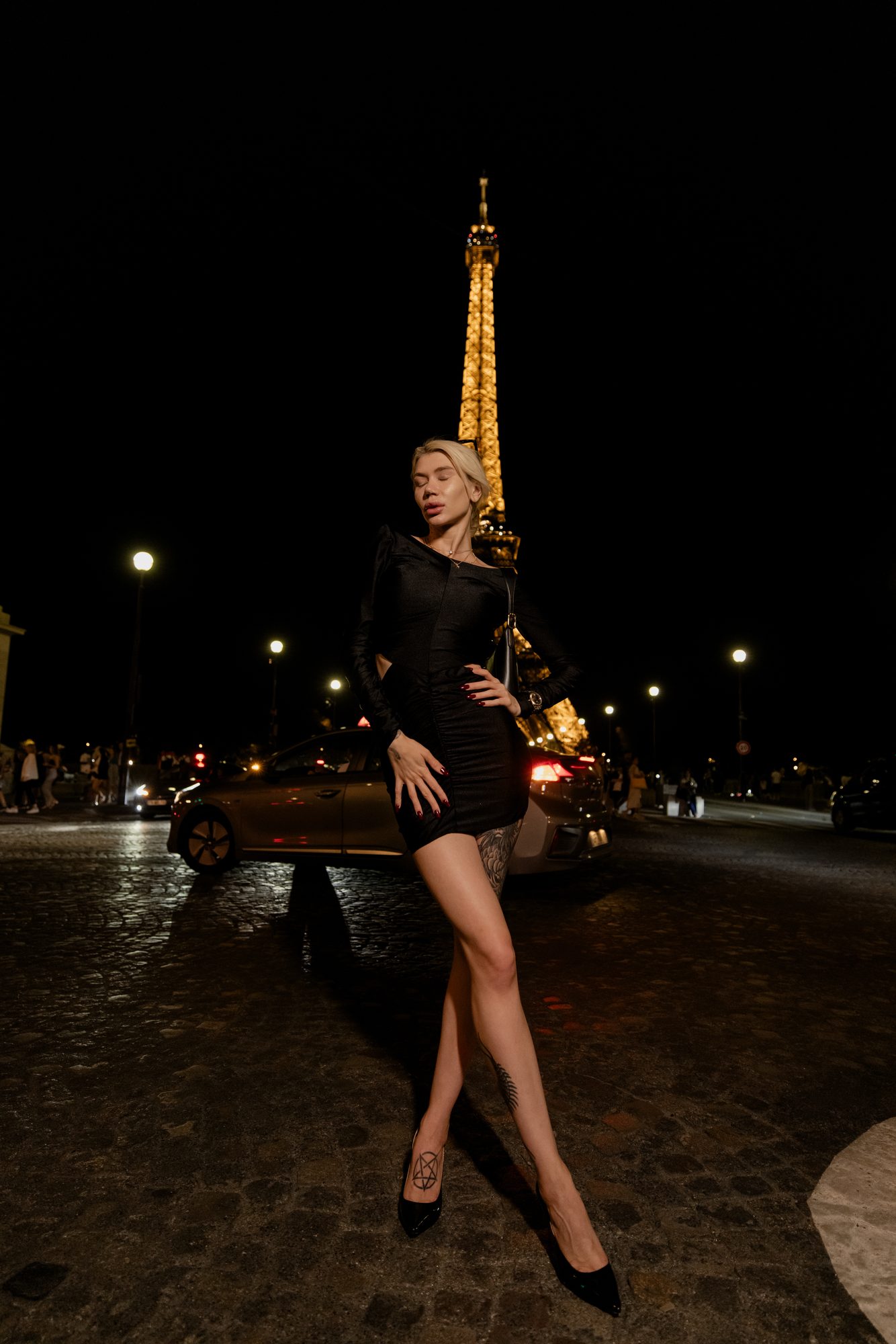
At night the background is dark with warm lamps. Light clothes separate you from it. A black outfit needs a lit wall or a lit monument behind it, or you become a face and two hands.
Small patterns such as fine stripes and tiny checks can shimmer on a camera sensor, and logos pull the eye away from your face. Choose plain fabrics or large prints.
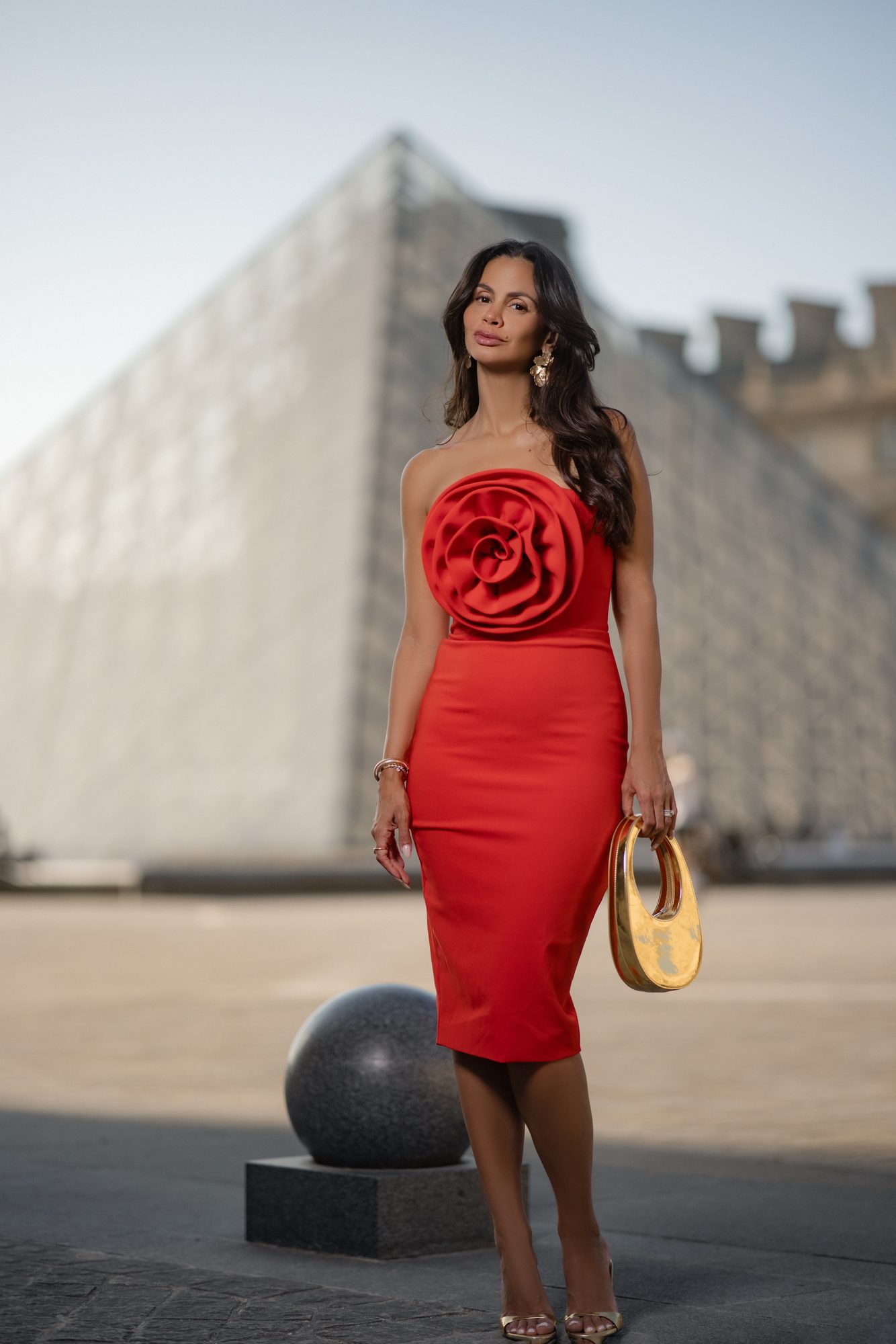
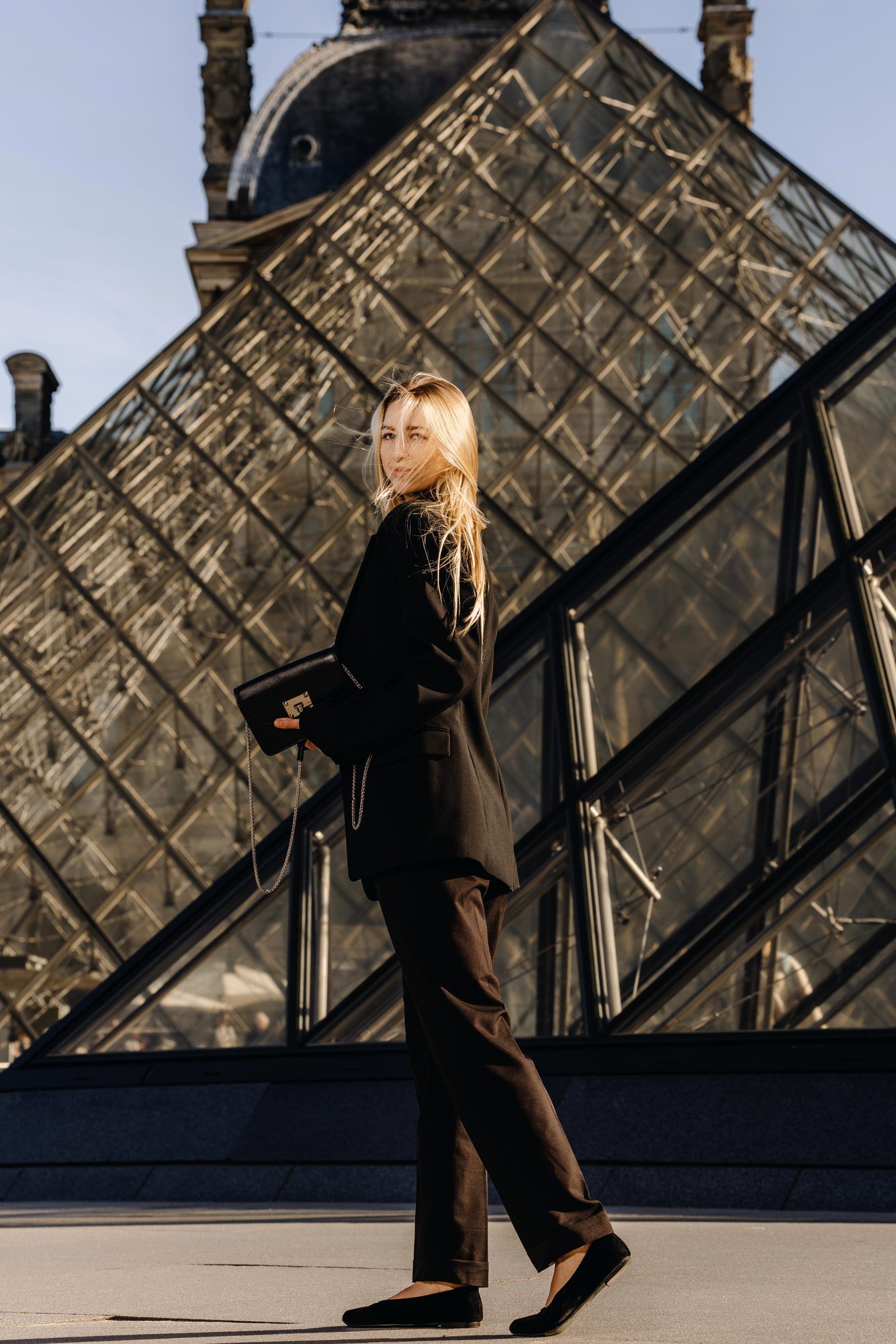
Cobblestones decide the shoes. The Louvre courtyard, the quays and many old streets are paved with uneven stone, and thin heels catch in the gaps. Walk in flat shoes and carry the pair you want in the pictures.
In winter the average afternoon high is around 8°C and mornings sit near 3°C. Bring a coat you are happy to be photographed in, thin thermal layers under the outfit, and gloves for the breaks. In July the average high is about 26°C and the record is 42.6°C, so a sunrise session is the comfortable one. Bring water.
Rain
Météo-France figures for Paris (1991 to 2020 averages) show rain spread evenly through the year. Days with at least 1 mm of rain: about 10 in January, 9 in April, 7 in July, 10 in October and 11 in December, the wettest month by that count. Days with 5 mm or more are rarer, three to five a month. So in any month roughly one day in three or four has some rain.
If it rains, a session can move under cover. Paris has arcades and covered passages where you stay dry and the light is even. A plain umbrella, black or transparent, works as a prop. Wet paving reflects street lamps and lit buildings, so an evening session after rain has its own look.
Getting between locations
Three popular spots are further apart than they look on a map. Trocadéro to Pont Alexandre III is about 2.2 km, close to 30 minutes on foot. Pont Alexandre III to the Louvre pyramid is another 2.1 km and 30 minutes. Trocadéro to the Louvre is about 4 km, close to an hour of walking.
By metro, Trocadéro to Palais Royal-Musée du Louvre takes about 20 minutes: line 9, then line 1 from Franklin D. Roosevelt. Trocadéro to Invalides, the stop for Pont Alexandre III, is about 15 minutes with one change, and Invalides to the Louvre about 14. Add the walk to and from the platforms. In a one-hour session, two locations is realistic and three is a rush.
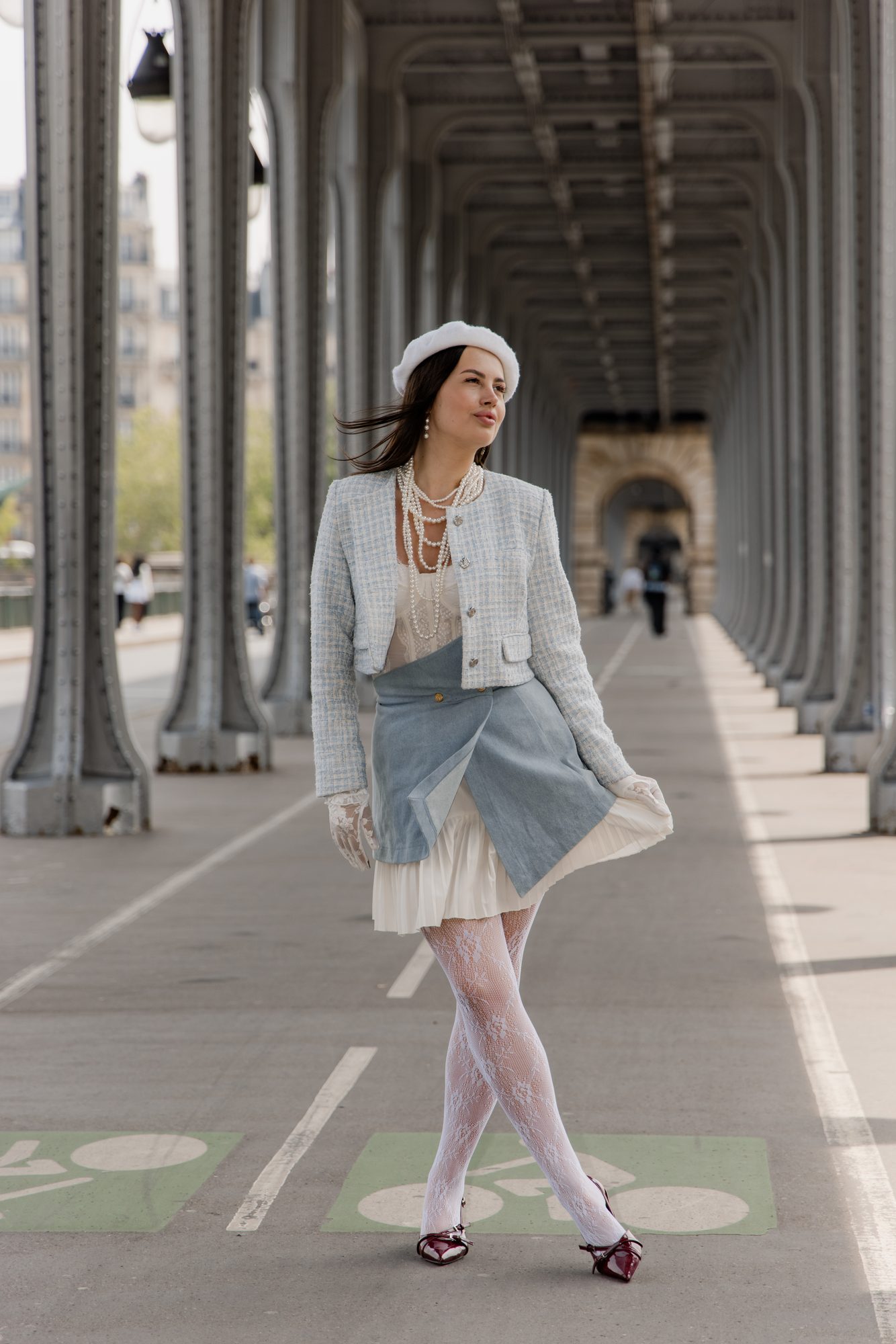
Arrive in your first outfit. For a second look, layers that go on over the first one are faster than hunting for a toilet. Leave suitcases at your hotel. The Louvre has free lockers under the Pyramid, but they are inside the museum and refuse anything larger than 55 x 35 x 20 cm.
Safety
The Paris police guide for visitors warns about pickpockets and street scams at tourist sites and on public transport. Its advice: carry a small cross-body bag with the opening towards you, keep nothing in back pockets, and don't put your phone in an outside pocket or hand it to a stranger. It also warns that phones get snatched while people take selfies. Pickpockets can work in groups, one distracting you while another opens the bag.
Walk away from people holding a petition who ask for a signature and then for money: the police list this as a scam at the main sites. The same guide asks visitors not to buy from pavement sellers.
During a session your bag is the weak point, because you put it down and look at the camera. Bring one bag that zips, and keep it at the photographer's feet or in the frame.
What to ask a photographer before you book
How many edited photos do I receive, and can I buy more? When will I get them, and in what form? What happens if it rains: do we reschedule, move under cover, or shoot anyway? How much is the deposit, and is it refunded if I cancel or my flight changes? Can I print and post the photos freely, and will you use them in your portfolio or on social media?
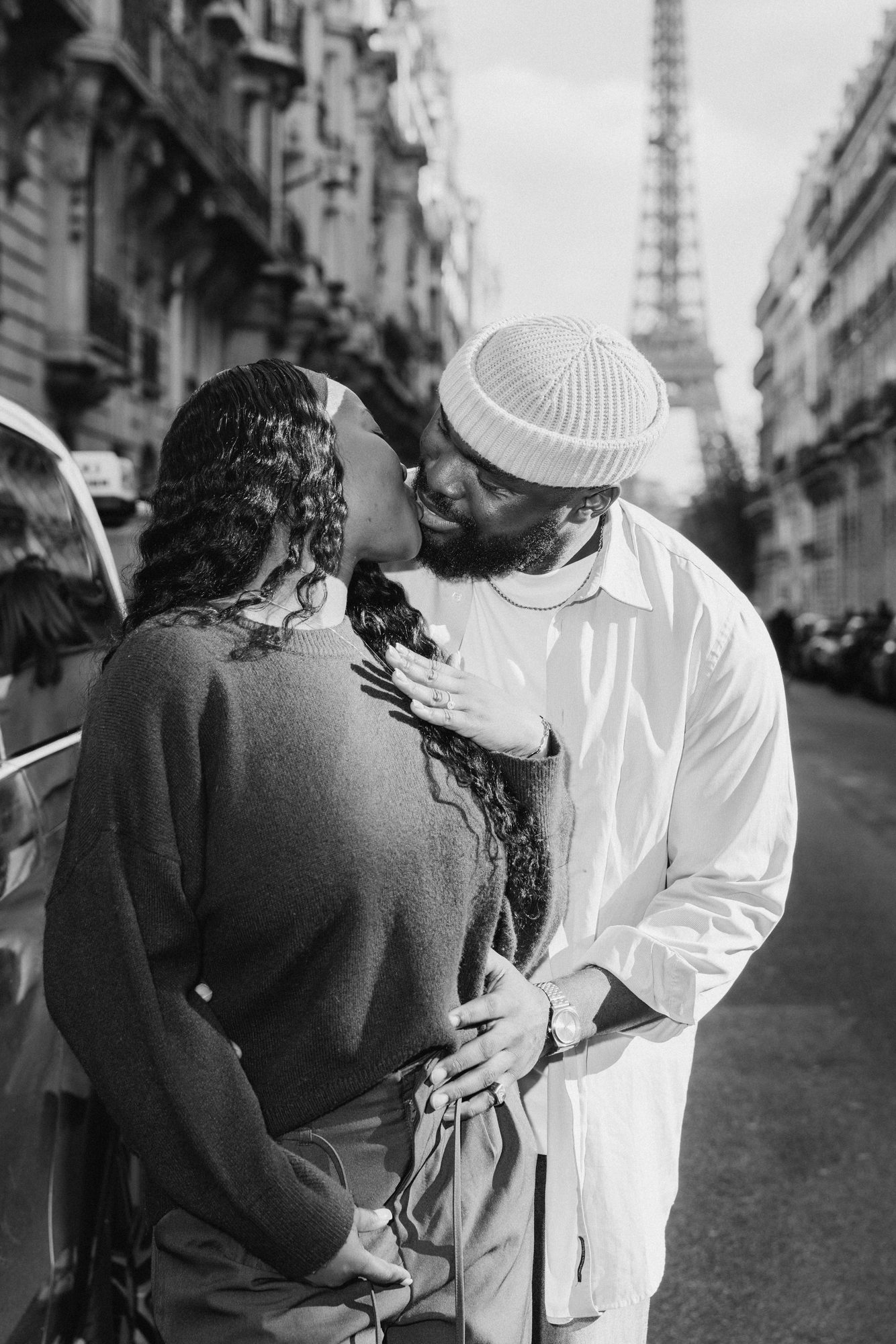
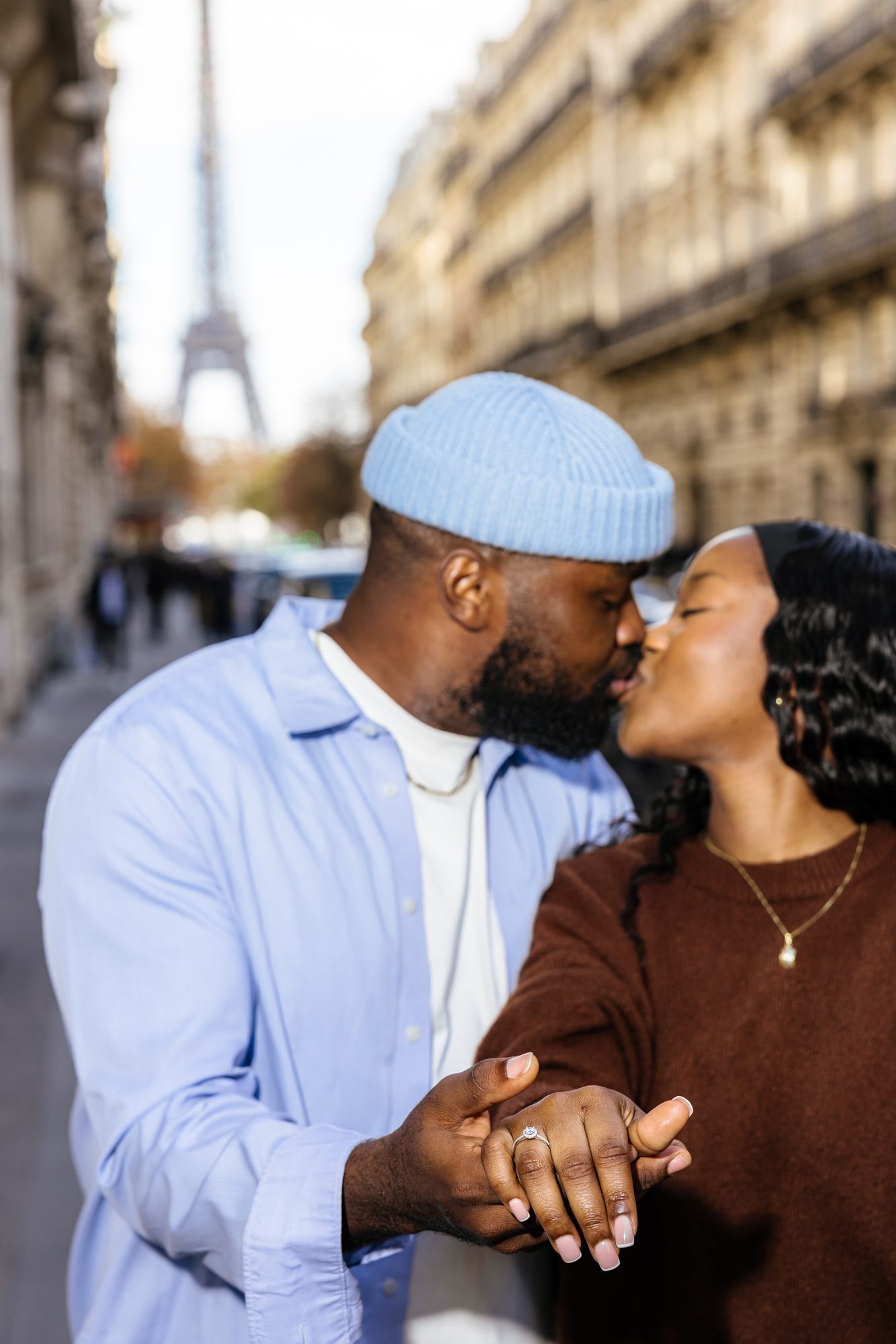
Ilia Pisarenko photographs portraits, couples and proposals in Paris.